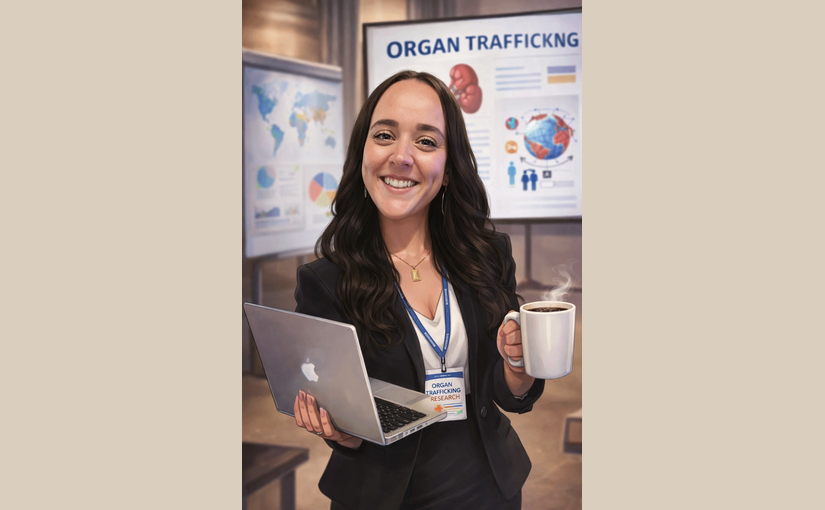
My Research: Organ Trafficking, Transplant Tourism, and Human Rights
My research explores the intersection of organ trafficking, transplant tourism, and human rights, with particular attention to poverty, exploitation, and unequal access to healthcare. I am interested in how social and economic conditions shape people’s choices—and what meaningful consent looks like when those choices are constrained by financial desperation.
Where My Interest Began
My interest began with a TED-style presentation in Foundations of Human Rights and Social Justice. What started as a classroom assignment became a subject I wanted to understand more deeply. Preparing the presentation encouraged me to ask questions about bodily autonomy, human dignity, and the responsibilities of institutions when people become vulnerable to exploitation.
Throughout my MA, I returned to these questions through different courses and assignments. Each provided another perspective, allowing me to connect human rights principles with theories of structural violence, global inequality, and healthcare equity.
Developing My Research Direction
My earlier work examined how poverty and institutional failures can create conditions for organ trafficking. As my research developed, I became increasingly interested in transplant tourism and the boundaries of modern slavery. A central question guiding this work is: Can exploitative transplant tourism be understood as a form of modern slavery?
In exploring this question, I examine coercion, constrained consent, and the commodification of the human body. I also recognize the importance of distinguishing legitimate travel for transplantation from practices involving trafficking or exploitation. These distinctions help me develop a precise argument while acknowledging the complexity of the subject.
My research asks whose health is prioritized, whose vulnerability is overlooked, and how the benefits and harms of transplantation are distributed. It also considers the responsibilities of healthcare providers, governments, and other institutions in preventing exploitation and supporting affected people.
Why This Research Matters to Me
This research connects my commitment to human rights with my interest in healthcare. It has encouraged me to think about health beyond treatment alone and to consider the social conditions that influence whether people can access care, exercise autonomy, and live with dignity.
It has also shaped my development as a researcher. I have learned to question assumptions, evaluate competing interpretations, and communicate difficult subjects carefully. Writing about exploitation carries a responsibility to represent affected people respectfully and to avoid reducing their lives to examples of suffering.
Looking Ahead
I hope to continue exploring responses that connect prevention and accountability with victim support, economic opportunity, and equitable healthcare. My long-term goal of becoming a physician gives these questions particular significance: I want to carry an understanding of human rights and social inequality into the way I approach care.
This page brings together selected work that traces the development of my research interests and the questions I hope to pursue beyond the MA.